Tree Roots, Foundations and Sewer Lines in Abilene
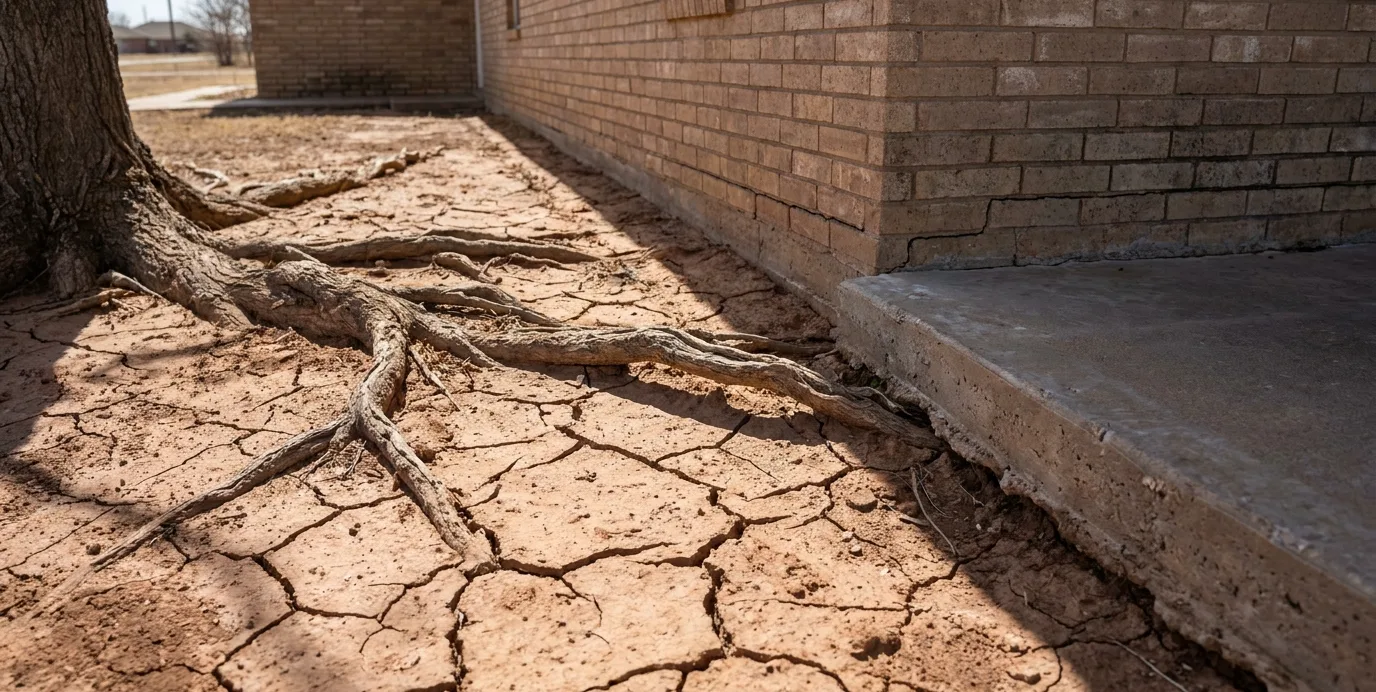
A large shade tree growing close to the house is one of the most common worries we hear about in Abilene. Homeowners have heard that roots crack foundations and break pipes, and they want to know whether their tree is a threat. The honest answer is that it depends on the soil, the tree and the distance, and the way the damage happens is not quite what most people imagine. In this post, we explain how roots, clay soil and foundations interact and what you can do to protect your home.
How Clay Soil Moves
Much of the soil around Abilene contains expansive clay. When it gets wet, it swells; when it dries out, it shrinks and cracks. A concrete slab foundation sitting on that soil moves with it, and uneven moisture under different parts of the slab is what leads to cracks in walls, sticking doors and gaps around windows. Kansas State University's extension office has a clear explanation of how clay soil shrinks and swells if you want the science behind it.
Where Trees Come In
Tree roots rarely push a foundation over by force. What a large tree does is draw a great deal of water out of the soil, especially in a hot, dry summer. If that tree sits close to one side of the house, the clay under that side dries and shrinks more than the rest, and the slab can settle unevenly. The effect is strongest with big, thirsty trees planted close to the foundation and during long droughts.
Roots and Sewer Lines
Roots do not usually break sound pipes either. What they do very well is find water, and an older sewer line with cracked sections or leaking joints gives off both moisture and nutrients. Fine roots enter through the gap and grow into a mass that slows or blocks the line. If you live in an older neighborhood such as Carver or Abilene Heights and have recurring slow drains, a camera inspection by a plumber is the way to confirm roots are the cause.
What Actually Helps
- Keep soil moisture even. During long dry spells, consistent watering around the foundation helps limit the shrink-and-swell cycle.
- Install a root barrier. A vertical barrier trenched between the tree and the house can redirect roots away from the foundation and pipes.
- Plant with distance in mind. A common rule of thumb is to keep large shade trees at least as far from the house as their expected mature height. Our guide to planting ornamental trees in Abilene covers smaller trees that suit tighter spaces.
- Do not cut large roots close to the trunk. Severing major roots to protect a foundation can make the tree unstable. If roots that large are the problem, removing the tree is usually safer.
Should the Tree Come Down?
Sometimes removal is the right call, particularly for a large tree only a few feet from the slab. It is worth knowing that clay soil can swell back after a big tree is removed, as the ground slowly regains moisture. If you already see foundation movement, talk to a structural engineer or foundation specialist before removing a large tree, so the timing and approach are planned together. When removal is the answer, our tree removal and stump grinding crews can take it out without damaging the yard. Our affordable tree removal guide explains what drives the cost.
At Abilene Tree Service, we are happy to look at a tree near your foundation and give you a straight assessment, whether you are in Chimney Rock, Fairway Oaks or anywhere else in Abilene. Call (325) 225-6404 to schedule a visit.
Need Professional tree service Services?
Contact Abilene Tree Service today for expert tree service services in Abilene.
Call (325) 225-6404